Job geometry comes first
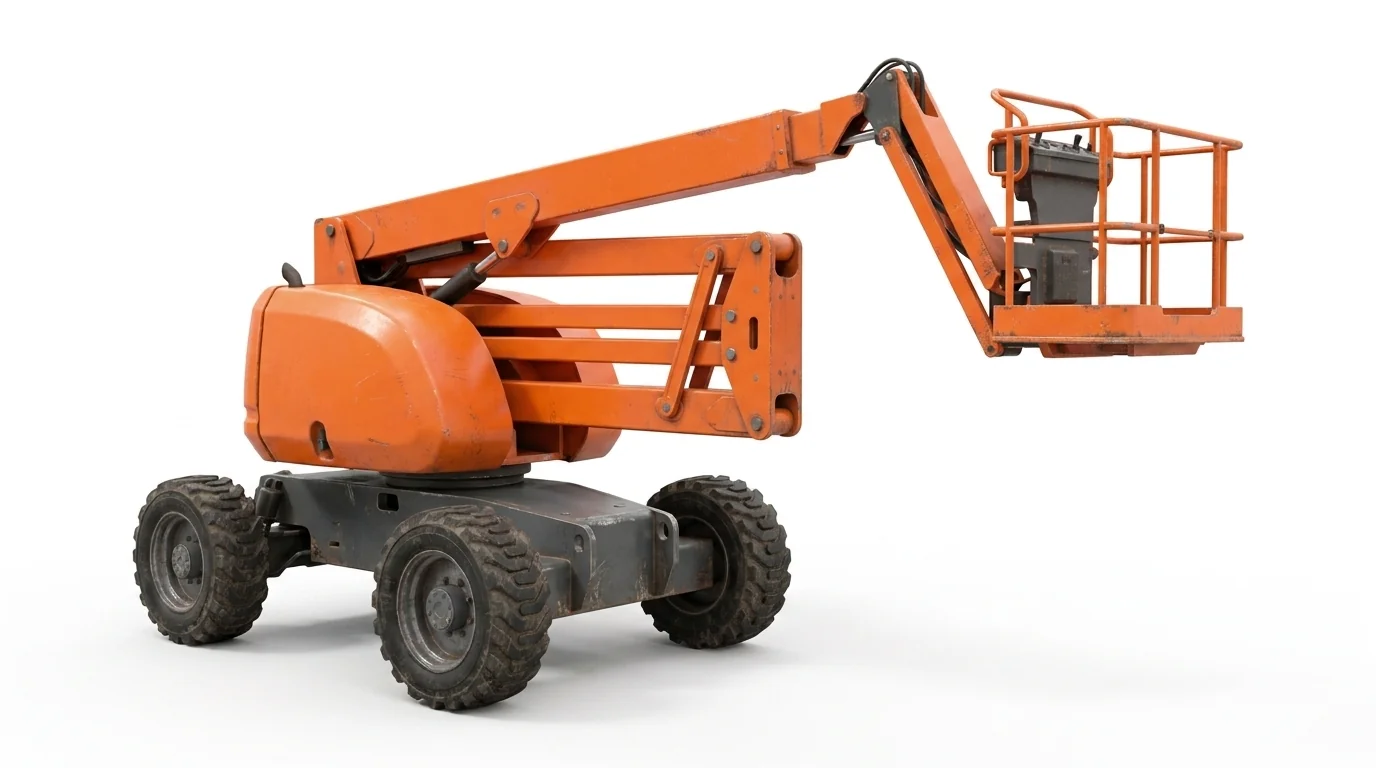
Articulating booms solve three common situations:
- Obstruction between the machine and the work (awnings, conveyors, mezzanines).
- Need to start work below the landing point, then reach up and over.
- Tight setup spaces where a straight boom’s tail swing is limited by walls or lanes.
Measure horizontal clearance to the obstacle, required up-and-over height, and final working height. On interior retrofits at medical and logistics sites, narrow chassis models help thread through doors and corridors before unfolding.
Fort Myers ground and weather considerations
Local soils are sandy and can settle when loaded. On unpaved aprons or construction fill, rough-terrain models with larger tires distribute weight better than slab-only units. Where staging is on compacted base or asphalt beside industrial sites, confirm whether the surface can handle concentrated loads at the outriggers or wheel contact points. Coastal humidity and salt air accelerate corrosion on exposed components; planning indoor storage and rinse-down areas during extended rentals protects electrical harnesses and pins.
Narrowing the size class
Key constraints that typically decide the model:
- Up-and-over envelope: the knuckle height must exceed the obstacle while maintaining horizontal reach to the work point.
- Chassis width: interior projects need doorway clearance; exterior downtown sites may have limited alley width.
- Power source: electric or hybrid for interior, rough-terrain diesel for exterior grades and job trailers.
- Surface condition: slab-rated tires for finished floors; rough-terrain for sand, sod, or compacted aggregate.
If the path is mostly vertical with a clear shot, a straight boom may cover longer reaches more efficiently. Compare options at /telescopic-boom-lift-rental/ and broader categories at /boom-lift-rental/.
Where articulating booms fit locally
- Post-storm façade inspections where debris or fencing blocks direct access.
- Over-canopy work at distribution docks with trailer lines in place.
- Interior mechanical tie-ins above corridors in healthcare and commercial build-outs.
Actual site conditions, the selected unit’s instructions, and job procedures govern exterior or elevated work.