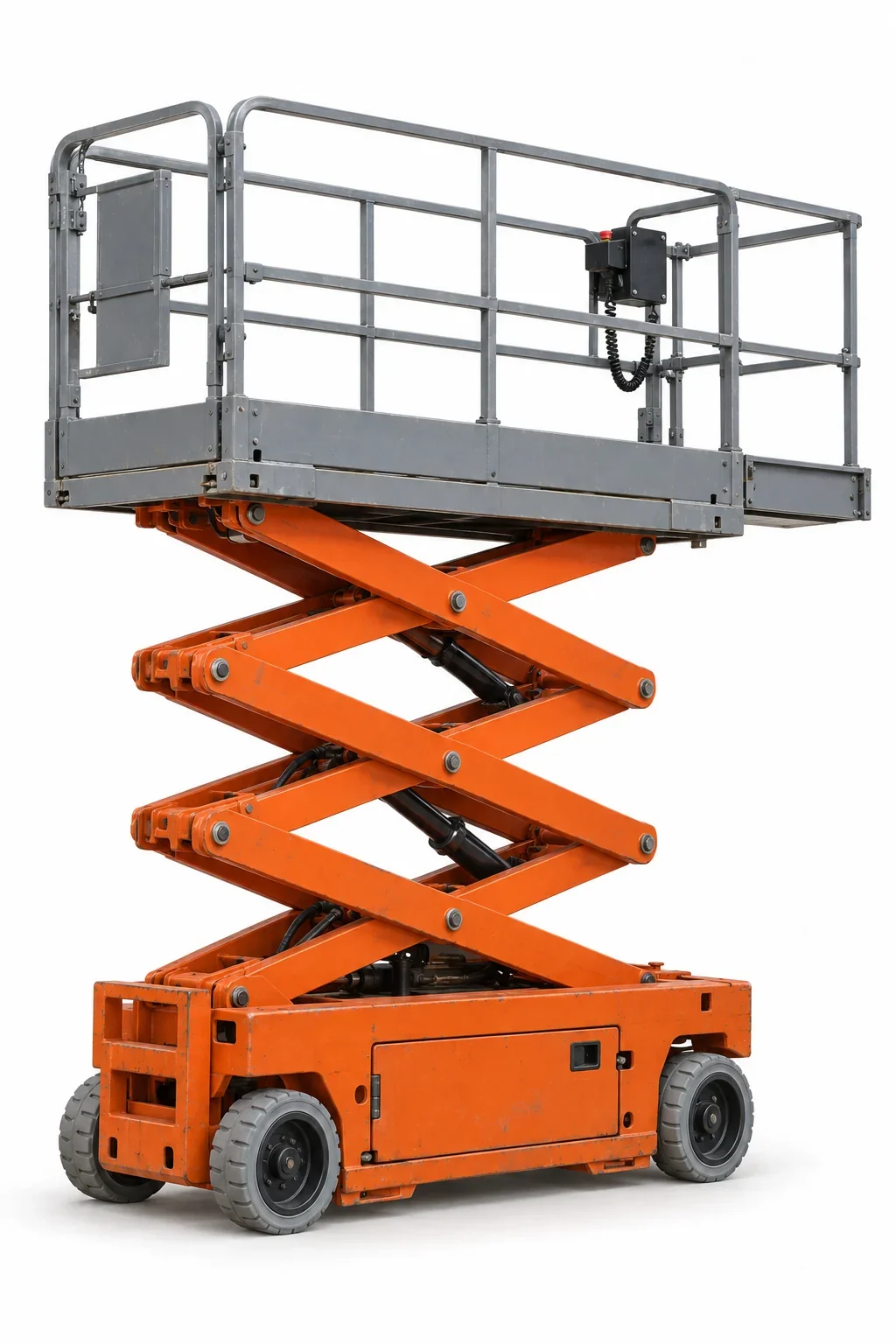
Where rough-terrain scissors make sense
- Unfinished pads, utility yards, and exterior steel work where the surface is uneven or loose.
- Post-storm inspections and repairs when debris and washouts create irregular approaches.
- Projects that need higher capacity platforms and wider decks for tools and materials at height.
Local surface and weather factors
- Sandy soils can settle under load. Wider footprints and stabilizing features help manage bearing pressure on soft ground.
- Coastal humidity and frequent showers call for weather-aware scheduling and protected staging when idle. Actual use must comply with site procedures and the unit’s instructions.
Key measurements before selecting a model
- Required platform height and deck extension for the task zone.
- Access path grades, curb cuts, and any soft shoulders the unit must cross.
- Turning space near the work to position squarely under the task.
- Clearance around façade elements, glazing, or canopies.
When a boom lift is a better fit
If the machine cannot sit directly beneath the work—such as reaching over landscaping, piping, or structures—consider: - Articulating booms for up-and-over reach: /boom-lift-rental/ and /aerial-lift-rental/. - Telescopic booms for straight, higher reaches in open yards: /boom-lift-rental/.
Related equipment for site logistics
- Material placement at height: /telehandler-rental/.
- Temporary power and lighting for extended shifts: /generators-light-towers-rental/.